Received an NYC DOT sidewalk violation notice? Owners generally have 75 days after receipt to make repairs before the City may arrange the work and bill them. If the notice is posted rather than delivered, the posting date starts that period. The notice itself has no fine, but an open record can complicate a sale or refinancing.
Use this guide to review the notice, arrange the required repair and request a dismissal inspection. NYC DOT decides whether the completed work is satisfactory and updates the violation record.
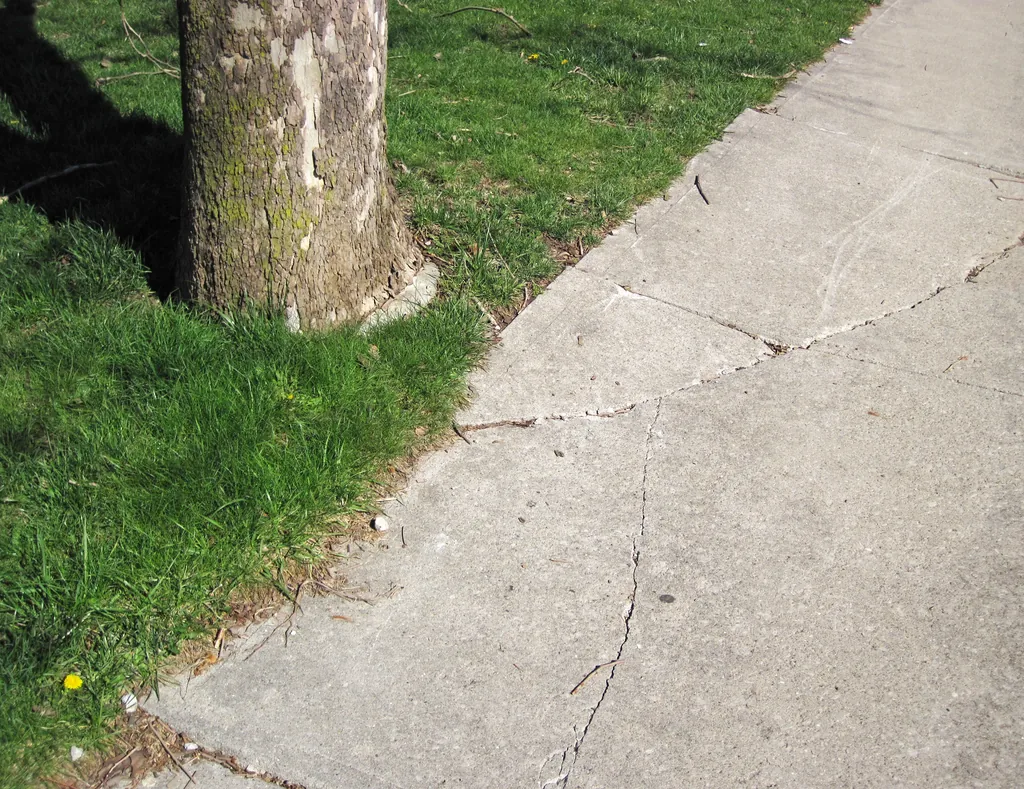
When a DOT inspector finds a defect in the sidewalk in front of your property, they issue a Preliminary Inspection Report. It comes with a diagram of your property showing the exact “flags” (sidewalk sections) marked as defective. A copy is filed with the County Clerk’s office against your address.
A few things people get wrong about it:
Read the notice and sketch promptly, confirm which defects apply, and start the permit and repair discussion early. A permit does not extend the 75-day period.
Start promptly after receiving the notice. These are planning stages, not official appointment dates or a promised inspection schedule. A sidewalk permit does not extend the repair period.
After the 75-day repair window, NYC DOT may arrange work and bill the property owner. Do not assume that the City will start on day 76, or that its price will always be higher or lower than a private quote.
An unresolved violation remains on the property record until the City provides the required notification of satisfactory repairs. It can complicate selling or refinancing. If NYC DOT arranges the repair, the owner receives a bill through the City process; payment and any contested charges follow separate procedures.
Maintenance duties, injury liability and repair assistance are separate issues. For example, eligible one-, two- and three-family properties with City-tree damage have specific repair and notice policies. Ask NYC311 about the property before commissioning private work where that exception may apply.
Review every flag marked on the Preliminary Inspection Report and the defects that need correction. NYC DOT says all numbered flags must be replaced and defects corrected. If the report does not match the property, request the appropriate review through NYC311 rather than deciding to omit work.
Check the contractor’s current license through DCWP and confirm who will obtain the required NYC DOT permits. DOT says a contractor doing the work must apply through NYCStreets. Private homeowners doing their own repairs have a permit-by-mail route; the completed work must still meet applicable requirements.
NYC DOT currently lists $70 for up to 300 linear feet of sidewalk at one property. A corner property or through lot may need multiple permits. Verify current filing requirements and fees; the permit fee is separate from the contractor’s repair price.
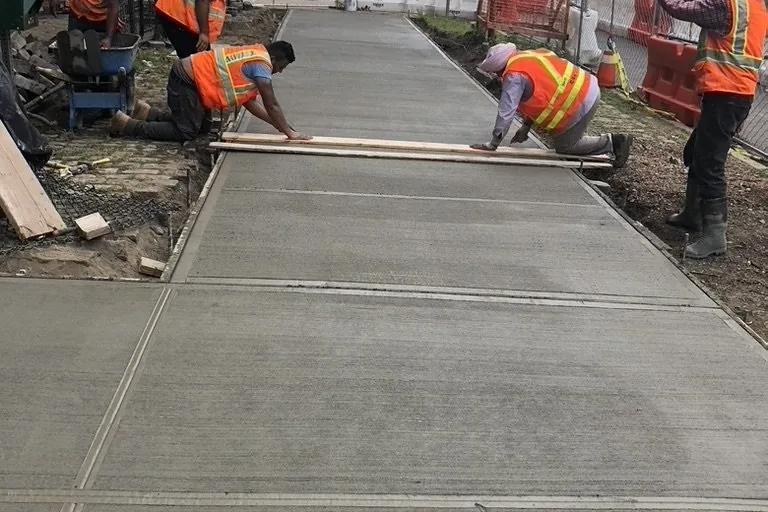
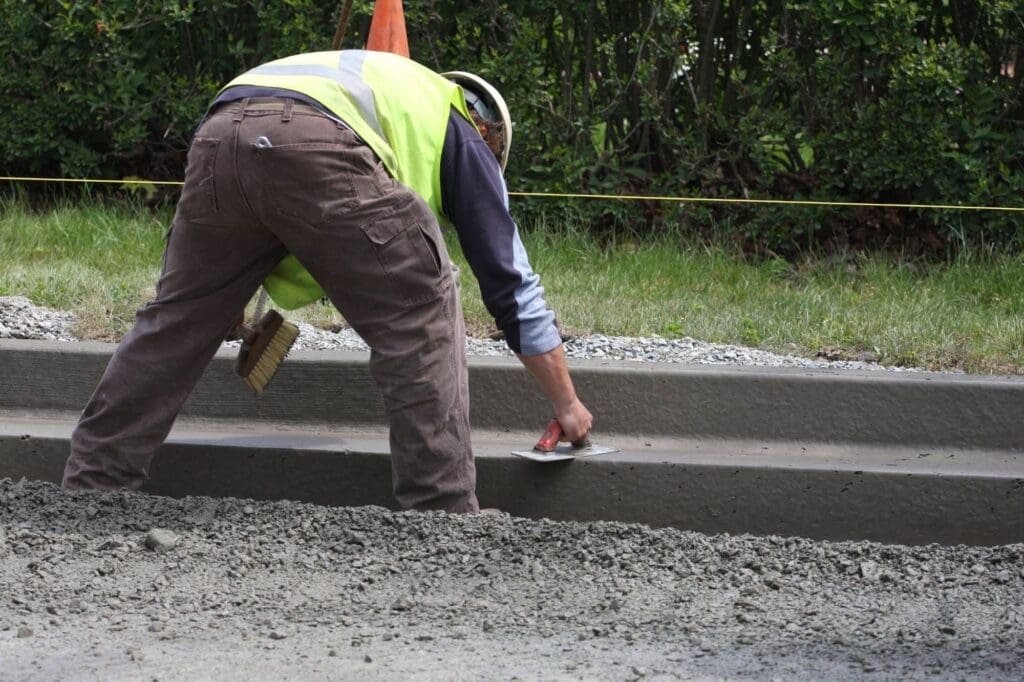
Agree the required specification and site protection before work starts. The inspection considers the completed sidewalk, including these details:
When the repairs are ready for inspection, request a Sidewalk Violation Dismissal Inspection through NYC311. Provide the permit number, address, block and lot, violation number, and the owner’s email and phone. Keep the entire sidewalk visible for the inspector.
NYC DOT decides whether repairs are satisfactory and provides official notification for the violation record. Keep the inspection outcome and check the record; do not treat an invoice alone as a dismissal.
There is no single reliable contractor price for every violation. The marked flags, demolition, base condition, concrete specification, access and any tree or curb constraints affect the quote. Request a measured scope and compare matching estimates. Our sidewalk repair cost guide explains what to check.
NYC does not charge owners of one-, two- or three-family properties for sidewalk repair caused by a City tree or its roots, and it no longer issues violations at those properties for damage caused solely by City trees. Ask NYC311 or NYC Parks about eligibility and the status of an existing notice. Do not assume an application changes a deadline; confirm instructions for the actual record before choosing private work.
If you disagree with the original defects, the process is different: NYC DOT allows a reinspection request within 75 days after receipt. Follow the official DOT notice, repair and inspection guidance for your situation.
Owners generally have maintenance duties, but City-tree repair assistance and other specific circumstances can change the route. Check NYC311 guidance for the address and the cause of damage before commissioning private work.
The standard NYC DOT sidewalk violation notice itself carries no fine. After the repair window the City may arrange work and bill the owner. Other offenses and unpaid charges follow separate rules.
NYC provides a permit-by-mail route for private homeowners doing their own repairs. When a contractor performs the work, DOT says the contractor must apply for the permit. Check the current specifications and requirements first.
The schedule depends on repairs, permit records and NYC DOT’s inspection process. Request the dismissal inspection when the work is ready, provide the required details and retain the result. A private contractor cannot promise the City’s inspection date or outcome.
An open violation can complicate a sale or refinance. Ask the title company or your attorney how the record affects the transaction; it is not accurate to say every open notice automatically prevents every sale.
Have the notice and inspection sketch ready so we can review the marked sidewalk sections and discuss the repair. Get help with NYC DOT sidewalk repairs. After the work, NYC DOT decides whether the violation can be dismissed.
