NYC property owners generally have a duty to maintain the adjoining sidewalk, but repair funding, City-tree policies and injury liability are separate questions. Start with the property type, the cause of damage and any notice rather than assuming every owner has the same obligations.
Keeping the sidewalk in a reasonably safe condition falls to the owner of the property it runs past, including repairs, cracks, trip hazards and the cost of the work.
Section 7-210 excludes one, two or three family properties that are at least partly owner occupied and used only for residential purposes from its owner-liability provision. This does not remove maintenance duties or decide every injury claim; the property facts and other rules still matter.
Those two things get mixed up constantly, so it is worth separating them. One is about who fixes the slab. The other is about who gets sued when somebody trips on it. They do not always land on the same person.
Cracked flags, a raised or sunken section, a trip hazard, a hole, or a slab that has broken into pieces. If DOT inspects and agrees, a violation goes onto the property record.
Check the property record before a sale. Ask the title professional how an open sidewalk notice and any repair charges will be handled.This is the question that changes the answer. A one, two or three family home that the owner lives in, used only as a residence, sits in a different position from a commercial building, a rental building or a mixed use property.
Property classification can affect how section 7-210 applies. It does not establish who is liable in every accident; a disputed claim needs advice based on the actual facts.Identify whether the tree is City-owned and whether the sidewalk damage is caused solely by it. NYC has specific repair funding and violation policies for qualifying one-, two- and three-family properties. Do not cut or shave City-tree roots.
Read our guide on tree root sidewalk damage and who pays for it.NYC Administrative Code section 19-152 addresses sidewalk maintenance. Section 7-210 addresses potential injury liability and contains an exception for certain owner-occupied one-, two- and three-family residential properties. These are different questions. Read the NYC DOT owner guidance and seek qualified advice for a contested claim or transaction.
| Situation | Where it usually lands |
|---|---|
| Cracked or uneven flags outside a commercial building | Owners generally have maintenance duties and may face injury claims; the facts and applicable exceptions determine liability. |
| Same defect outside an owner occupied two family home | Maintenance duties remain a separate question from the section 7-210 residential exception. Injury liability is not determined by this table. |
| Damage caused by a city tree | Check eligibility. NYC does not charge owners of one-, two- or three-family properties for repair caused by a City tree or its roots; other conditions need separate review. |
| Damage caused by a utility or a contractor cut | Document the damage and contact the utility or contractor responsible. Check permit records and the applicable claims process. |
| DOT does the repair after a violation | The cost is billed back to the property |
| Snow and ice clearing | Owner, within the time limits set by the city |
A violation copy remains on file with the County Clerk until official notification of satisfactory repairs. An unresolved notice can complicate selling or refinancing, so check the record and the required repair or review steps early.
After the 75-day repair window, NYC DOT may arrange the work and bill the owner. Unsafe conditions also remain a practical concern while the notice is unresolved. Keep the work area safe and seek advice on any specific injury or insurance claim.
Not every crack triggers a violation. Inspectors look for specific conditions, and knowing them tells you whether you are looking at a repair or just an old sidewalk.
Tree damage sits across several of these at once, which is why those repairs need a different approach rather than a straight replacement.
The sequence matters, because skipping a step is how owners end up paying twice.
A lease may allocate maintenance or reimbursement between an owner and tenant. That does not by itself decide the City’s notice process or legal responsibility to an injured person.
Read the lease with your attorney and insurer if responsibility is disputed. Coordinate the repair and access arrangements while the legal and insurance questions are addressed; a contractor cannot decide contractual liability.
Nobody can quote this properly from a photo alone, but these are the things that actually move the number.
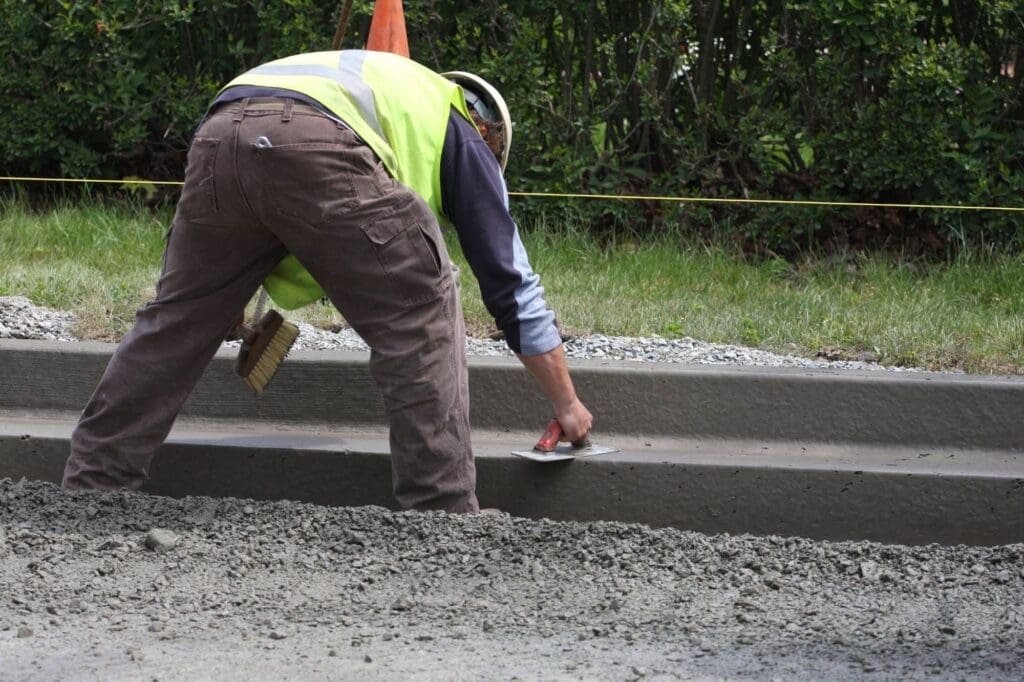
A sidewalk repair that closes a violation is not the same as filling a crack. The flag is removed, the base underneath is corrected, and new concrete is poured to the required thickness and slope, with the correct finish and joint spacing. Permits are pulled before the work, and the site is re-inspected after.
Our NYC DOT notice repair service and concrete replacement service explain the site assessment. Where roots are involved, check the tree policy and approvals first; no repair can guarantee roots will never affect the surface again.
Check the property and eligibility first. NYC does not charge owners of one-, two- or three-family properties for sidewalk repairs caused by a City tree or its roots. Ask NYC311 or NYC Parks about the applicable program and any existing notice before ordering private work.
Owners generally have 75 days after receiving the notice before NYC DOT may arrange repairs and bill them. Where the notice is posted, the posting date starts the period. Confirm instructions for any appeal or City-tree review.
Do not assume a notice expires on its own. Check the current record with NYC311. Satisfactory repairs require the City’s dismissal process, while a qualifying City-tree case may have a separate review route.
Check requirements before starting. NYC provides a permit-by-mail route for private homeowners doing their own repairs; contractor work has separate filing requirements. A cosmetic patch may not correct a cited defect or satisfy an inspection.
Request the violation status through NYC311 and have your title professional review the property record before closing. Ask how any open notice or repair charge will be addressed in the transaction.
Document the condition and contact the company responsible for the damage. NYC DOT provides an address-based permit search that can help identify the work. Raise a claim through the relevant company’s process rather than assuming every case has the same outcome.
Not sure where your property stands? Send the address, photos and any notice to discuss the condition and arrange an assessment. We can review repair options; NYC DOT makes violation decisions. Free estimate requests are accepted in Manhattan, Brooklyn, Queens, the Bronx and selected Westchester cities. Call (646) 463-2669 or email contact@sidewalksrepairnyc.com.
